The Technologies Quietly Changing How We Work
The most consequential workplace technology is often less visible than a headline-making product: it connects routine systems, assists decisions and gives people better ways to check their work.

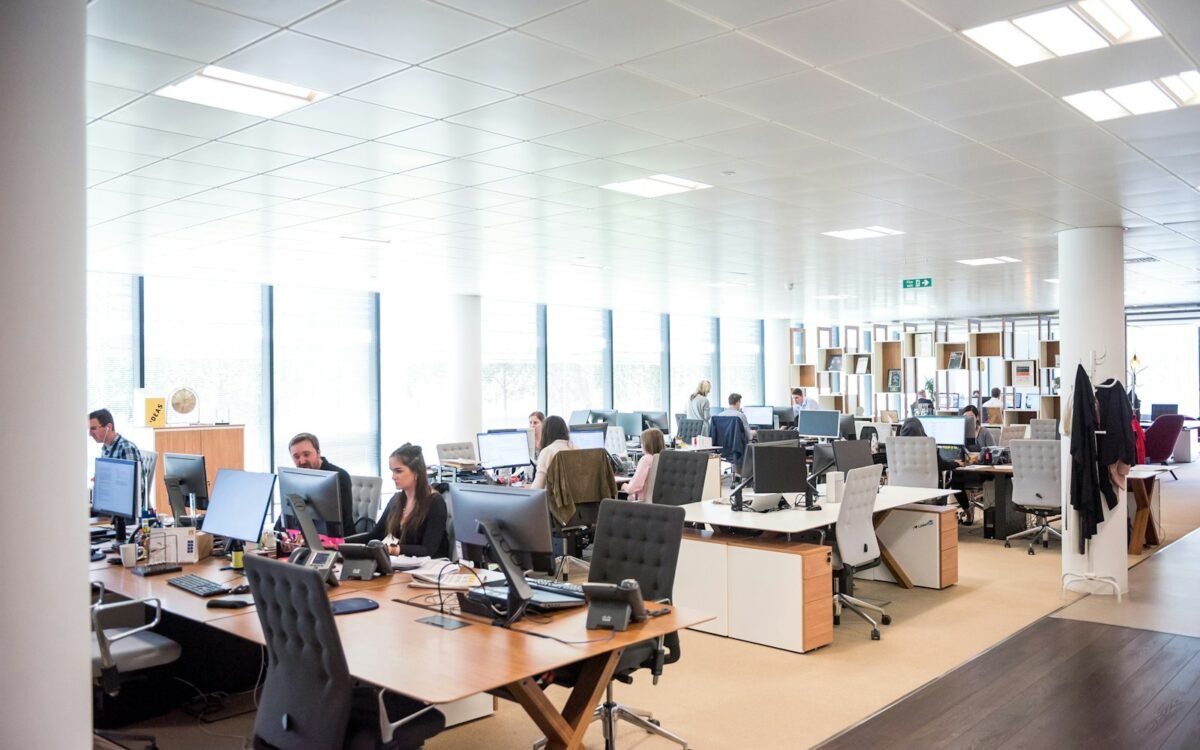
At 8:40 on a Monday morning, a service coordinator may already have opened six systems: email, a ticket queue, a customer record, a shared calendar, a stock list and a chat thread. The work is not difficult because any one screen is mysterious. It is difficult because the coordinator must carry the same facts from one screen to the next without losing a detail. A small automation that gathers those facts into one reviewable task can change the day more than a dramatic new interface.
That kind of change is easy to miss. Workplace technology is often discussed through launches, brand names and spectacular demonstrations, while the largest practical gains come from quieter layers: software that passes information between tools, models that prepare a first draft, sensors that report conditions and permissions that let the right person act. These systems do not remove judgment. They reshape where judgment is needed.
The useful question is not which technology sounds most advanced. It is where a team is losing time, context or confidence, and whether a new system can reduce that loss without making the result harder to inspect.
Workflows are becoming connected
Many businesses still depend on handoffs designed for an earlier era of software. Someone downloads a report, renames it, copies selected rows into another application and sends a message to explain what changed. Application programming interfaces and workflow tools can replace some of those steps with a connection that moves an event or a field automatically. A new order can create a fulfilment task; a completed form can start a review; a calendar change can update a shared schedule.
Connection is valuable only when the rules are clear. Teams need to decide which system is authoritative, what happens when information is missing and who can correct a failed handoff. An automation that silently creates duplicate records is not progress. The best implementations show what happened, preserve a useful history and provide a visible route for a person to intervene.
Event-driven software also changes the rhythm of work. Instead of checking every queue at fixed intervals, a team can receive a focused request when a meaningful condition occurs. That can reduce routine monitoring, but it can also create alert fatigue. A good workflow distinguishes urgent exceptions from ordinary activity and gives people control over notifications.
Assistants are moving into ordinary tools
Generative artificial intelligence is entering word processors, customer systems, code editors, meeting software and search tools. Its most dependable workplace role is usually not making a final decision. It is preparing material that a person can assess: a summary with links to the underlying record, a draft reply, a set of suggested categories or a list of differences between two documents.
That distinction is operational, not philosophical. A draft can be wrong in a way that looks polished. A summary may omit the one exception that matters. A classification may reflect an ambiguous label rather than the customer's real need. Teams should therefore design an assistant around review: show the source, make uncertainty visible where possible and let the reviewer change the result without fighting the interface.
Search is another important use. A well-organised internal search system can help someone find a policy, decision or prior explanation without asking a colleague to remember where it lives. The quality of that help depends on permissions and document maintenance. A fast answer drawn from an outdated or restricted document can create more risk than a slower search.
Physical spaces are producing useful signals
Small sensors are making it easier to observe temperature, equipment condition, occupancy, movement of goods and energy use. In a warehouse, a sensor may indicate that a storage area is becoming too warm. In a building, it may help adjust lighting or ventilation to actual use. In a workshop, a machine signal may support planned maintenance before an interruption becomes an emergency.
The point is not to measure people simply because measurement is possible. A useful signal describes a condition that someone can act on. The system should collect the minimum information needed, explain who can see it and avoid turning a workplace into an opaque system of individual surveillance. Data about a room or machine is not automatically harmless if it can be used to infer where a person was or how quickly they worked.
Good deployments begin with a concrete operational question: what problem are we trying to notice earlier? They also include a way to compare the signal with reality. If a sensor reports a fault, a technician needs a practical check, not a new dashboard that becomes another source of uncertainty.
People still need better control
As tools become more capable, the human work shifts toward setting boundaries, interpreting exceptions and taking responsibility for outcomes. That requires training that is close to the real task. A general demonstration may inspire a team, but a short exercise using its own forms, records and edge cases reveals whether the technology helps or merely adds a new step.
Leaders should also ask what the system makes harder. Can a worker see why a task was assigned? Can a customer obtain a person when the automated route fails? Can a team export its data if the supplier changes terms? Can an administrator remove access promptly? These questions are less exciting than a launch announcement, yet they determine whether a tool remains useful after the first month.
Quiet technology earns trust when it makes the next decision clearer without hiding the work that led there.
The workplace of the near future will not be defined by one replacement for human effort. It will be defined by many small systems that remove needless friction while leaving judgment, accountability and correction in human hands.
Key takeaways
- Start with technology that removes friction from a known task.
- Keep human judgment visible where consequences are high.
- Measure better decisions, not just faster output.