The Case for Natural Materials in Modern Interiors
Natural materials can bring texture, age and sensory calm to a modern interior, but they work best when chosen for the job they must do. Compare durability, maintenance, sourcing and how materials will meet one another before specifying them.


A new room can look polished and still feel strangely flat: smooth fronts, hard reflections and no surface that changes when the light moves across it. Adding more decoration is not always the answer. A timber handle, a wool rug, a stone ledge or a linen curtain can give the room a more legible relationship with touch, wear and daylight.
Natural materials are not automatically virtuous, durable or low-maintenance. They vary widely, and some need careful sealing, regular cleaning or protection from moisture. The useful case for them is more specific: they can introduce texture, visual variation and a sense of connection to the building, while allowing an interior to age rather than remain visually frozen.
Natural materials earn their place when their behaviour is part of the design, not just their appearance.
Choose materials for the work of the room
Start with contact and conditions. A kitchen worktop must tolerate water, heat, cleaning and repeated impact. A bedroom curtain needs to handle light, dust and movement. A hallway floor sees grit and wet shoes. The most beautiful material is the wrong choice if its maintenance exceeds the household’s time or if its surface is unsafe in the conditions.
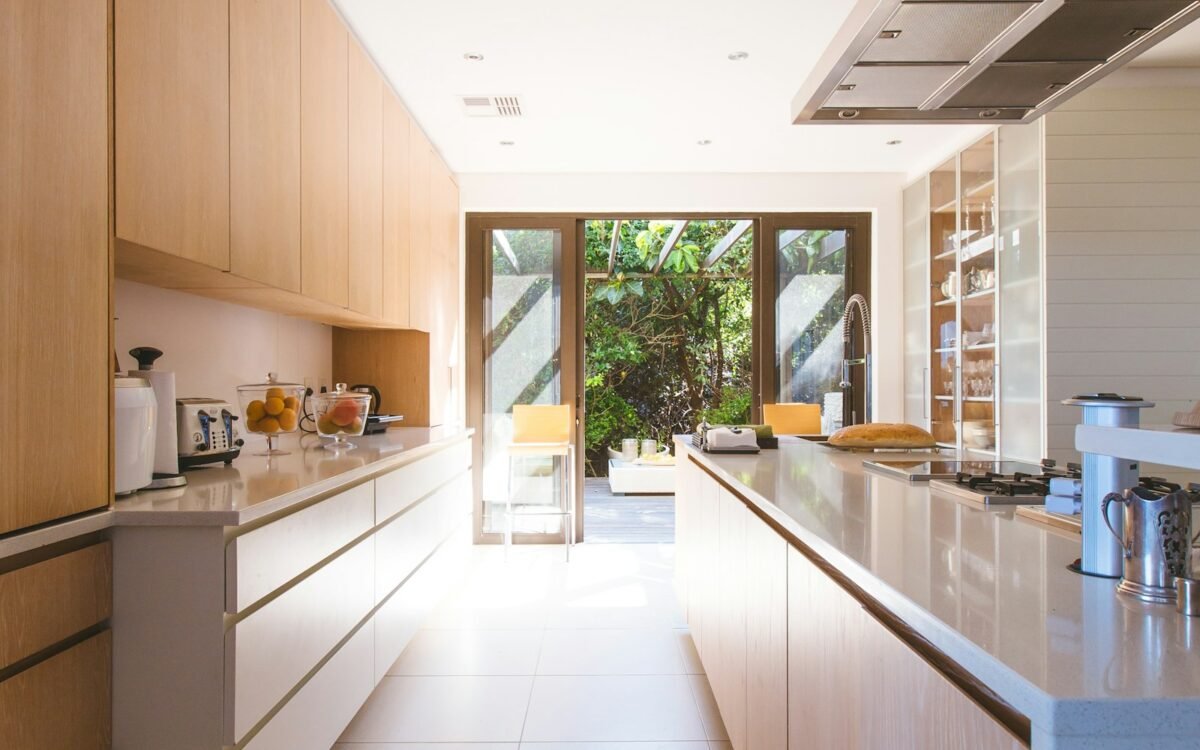
Timber shows why context matters. Solid wood, veneer and engineered boards have different construction, movement and repair characteristics. A sealed timber surface may suit a table or cabinet, while a rough untreated surface may be unsuitable near a sink. Ask the supplier how the material should be cleaned, what happens at exposed edges and whether it can be repaired or refinished.
Stone also needs a clear brief. Porous and softer stones may mark or require sealing, while a harder surface may still chip at a thin edge. Use a sample large enough to see variation, and decide whether the household will accept a mark as part of the material’s life. If every change will be treated as damage, a more stable finish may be kinder to the budget and the people using the room.
Textiles bring softness but collect dust and respond to sunlight. Wool, linen, cotton and blends each have different handling and cleaning needs. Check care instructions before using a fabric on a high-contact sofa, a child’s room or a window with strong sun. Comfort is a performance requirement, not a styling bonus.
Build a modern palette through contrast
Natural does not mean rustic. A clean modern interior can pair pale oak with a crisp painted wall, honed stone with simple cabinetry or woven texture with powder-coated metal. The modern quality comes from proportion, junctions and restraint. Let one material carry the visual weight and use the others to support it.
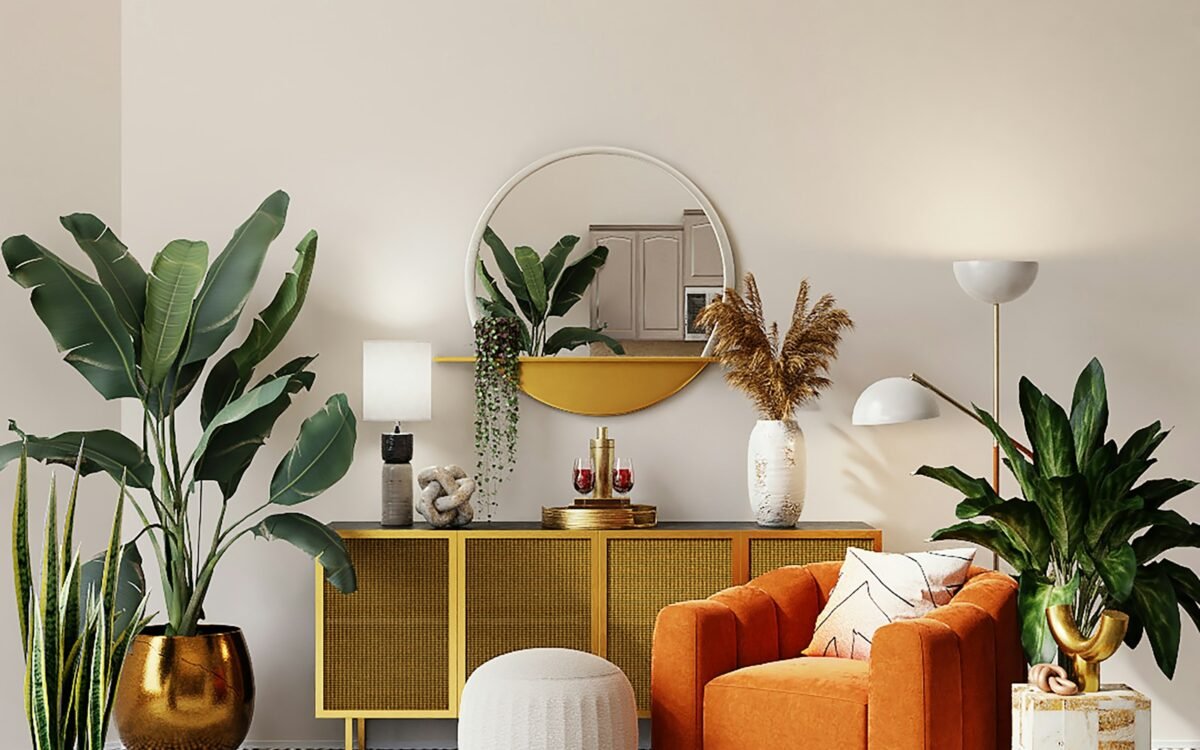
Work with a small material family. Choose a dominant surface, a supporting texture and one detail that catches the hand or light. For example, a quiet timber floor may sit beside painted joinery, a wool textile and a single stone surface. Repeating a material in more than one place helps the room feel deliberate, but exact matching can make it look like a showroom set.
Pay attention to undertones. Timber can lean honey, red, grey or brown; stone can read warm, cool, green or pink; fibres can look different under daylight and lamps. Place samples together in the actual room and view them at different times. A material that looks neutral in a shop can dominate next to a cool wall or a bright white ceiling.
Use texture to replace visual noise. A ribbed door, woven basket, brushed wood grain or irregular ceramic can add interest without introducing another colour. Keep the background calm so the variation reads as depth rather than clutter. Modern rooms often feel richer when fewer materials are given more space to be noticed.
Ask better questions about sourcing
Request clear information about origin, composition and certification where those details matter to the project. A label such as natural, sustainable or eco-friendly is too broad to make a decision by itself. Ask what the product is made from, where it was processed, how it is finished and what evidence supports any environmental claim.
Consider the whole life of the material. A product that lasts, can be repaired, is sold in replaceable parts or can be removed without destroying the surrounding build may be more useful than one with a reassuring marketing phrase. Keep spare tiles, a finish record and care instructions where future repairs can find them.
Local availability can be practical as well as environmental. A material that can be supplied, repaired or finished by people near the project may be easier to live with than an unusual product that depends on a long, fragile chain. Do not assume distance alone proves impact; use the information that is actually available and be honest about uncertainty.
Budget for preparation and installation. Natural materials can require skilled cutting, acclimatisation, sealing, specialist underlay or careful edge detailing. A cheaper surface can become expensive if the installer has to correct poor substrate preparation or if waste is high. Compare complete installed specifications rather than the material price in isolation.
Design for care and change
Write a simple care plan before installation. Note which products can be wiped, which need a mild cleaner, which should stay dry and how often a finish needs attention. Avoid mixing materials that need incompatible cleaning methods in one splash zone. Put vulnerable surfaces where they can be reached and inspected.
Accept useful signs of life, but not avoidable failure. A small scratch on timber may add character; a lifting edge beside a sink indicates a detailing or moisture problem. Protect vulnerable corners, provide coasters and mats where they help, and allow materials to breathe or move as the manufacturer directs. Good ageing is designed, not left to chance.
Use replaceable layers for experimentation. A natural fibre cushion, basket or lampshade can bring warmth without committing the whole room. Fixed materials deserve slower decisions because replacing them creates waste, cost and disruption. Live with samples, borrow swatches and view the room with existing furniture before ordering.
Natural materials make modern interiors more tactile and more capable of change, but only when their limitations are respected. Choose for use, verify what you can about sourcing, detail the junctions and make care part of the brief.
Key takeaways
- Choose natural materials for the room's contact, moisture, light, cleaning and repair demands.
- Create a modern composition through a limited material family, controlled contrast and tested undertones.
- Check sourcing information and budget for installation, maintenance, repair and eventual replacement.