How Battery Chemistry Is Quietly Being Reinvented
Battery innovation is moving beyond a single race for more energy. Engineers are revisiting the materials, electrolytes, manufacturing methods and use cases that determine whether a battery is safe, durable, affordable and easy to recycle.

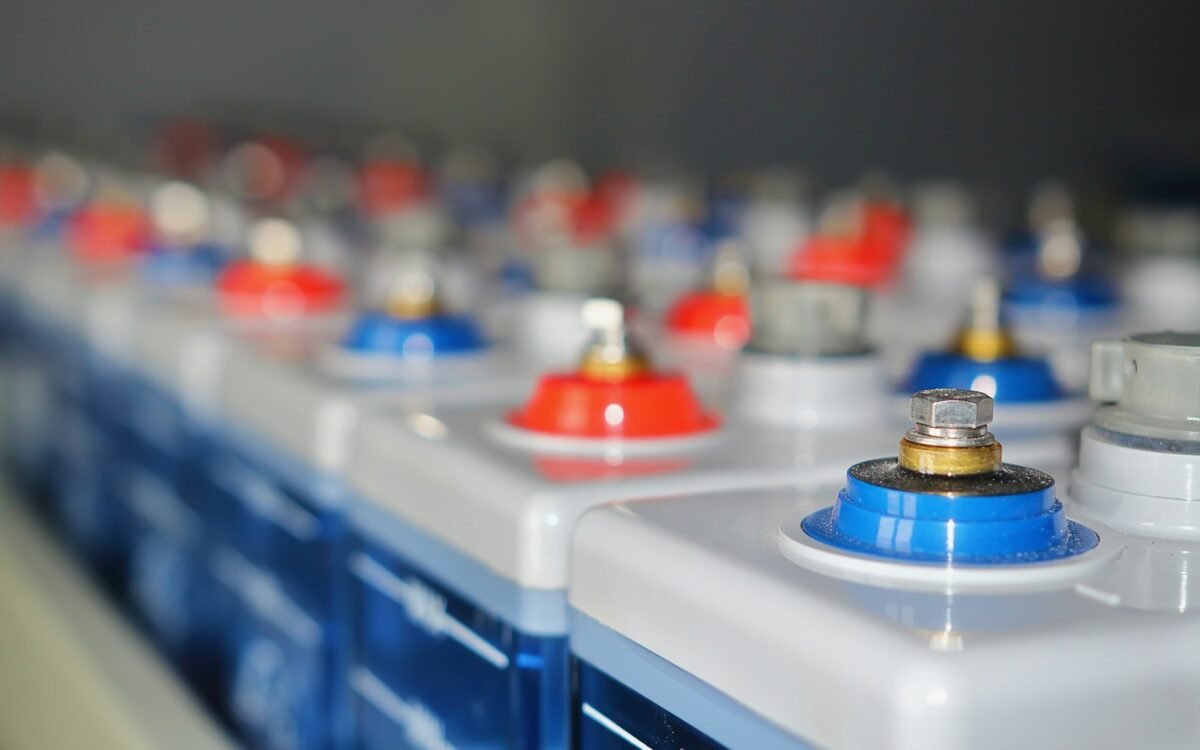
A battery pack in a bus, laptop or home does not look like a chemistry experiment. It is a finished object assembled from coated foils, porous electrodes, an electrolyte, separators, sensors and a control system. Yet every decision inside it reflects a chemical compromise. More stored energy can bring greater demands on cooling and safety. A cheaper material may be heavier. A design that performs well in a laboratory may be difficult to manufacture consistently. Battery chemistry is being reinvented through many such quiet adjustments rather than one universal replacement.
The basic principle is established. During discharge, chemical reactions move ions through an electrolyte between two electrodes while electrons travel through an external circuit. Charging drives the system in the opposite direction. The useful battery is not simply the cell with the most energetic reaction; it is the cell whose reactions remain controllable over many cycles in a real environment.
The lithium-ion family keeps changing
Lithium-ion batteries remain a broad family rather than a single recipe. Different cathode materials balance energy, power, cost, lifetime and safety in different ways. The anode, electrolyte, separator, particle shape, coating and charging protocol matter too. A change to one component can alter how heat is produced, how quickly a cell ages and how difficult it is to manufacture.
Researchers and manufacturers are reducing reliance on some scarce or expensive ingredients where practical, and they are tuning electrode structures so ions can move without damaging the material. Some cells use chemistries that trade a little energy density for lower material cost or a different safety profile. Those tradeoffs are not signs of failure. A vehicle that needs long range has different requirements from a stationary battery that can occupy more space.
Battery ageing is also being treated as a design problem. Repeated charging can change electrode surfaces, consume electrolyte and create mechanical stress. High temperatures and very rapid charging can accelerate some degradation pathways. Better sensors and control software can keep a pack within safer operating limits, but software cannot repeal chemistry. The goal is to manage known reactions while developing materials that tolerate them better.
Sodium and other abundant ingredients
Sodium-ion batteries replace lithium ions with sodium ions. Sodium is widely available, and the chemistry can use material combinations that are attractive where cost and supply resilience matter more than maximum energy per kilogram. The larger sodium ion changes how it fits into electrode structures, so researchers must solve questions about capacity, cycle life, low-temperature performance and manufacturing compatibility.
Sodium-ion cells are an established research and development direction, but their role is still a deployment question that depends on product requirements and production scale. They may suit some vehicles, backup systems or storage applications while lithium-based cells remain preferable for others. Calling them a universal successor would be premature.
Other concepts use entirely different reactions. Metal-air systems draw a reactant from the surrounding air and could, in principle, store much energy with relatively light active material. Flow batteries store reactive materials in external tanks and can separate energy capacity from the size of the power-producing stack. Both approaches face substantial engineering challenges, including reaction control, material stability, efficiency, system size and cost.
Solid electrolytes and safer boundaries
A conventional cell uses a liquid or gel electrolyte. A solid-state design uses a solid ion-conducting material, potentially allowing a different separator arrangement and improving resistance to leakage or combustion under some conditions. The phrase solid state covers many materials, each with its own problems. A solid must conduct ions quickly, form good contact with both electrodes and survive repeated expansion, contraction and chemical change.
The hardest battery problem is rarely finding a reaction that works once; it is making that reaction behave predictably thousands of times.
Interfaces are especially important. A small gap or unstable boundary can increase resistance and create local heating. Manufacturing a thin, defect-free solid layer over a large area is not the same as demonstrating a small laboratory cell. Solid-state batteries are a credible possibility for future products, but claims about timing and performance should be separated from results that have already been demonstrated at scale.
Charging is another boundary between chemistry and use. A charger changes the voltage and current experienced by every cell, while a battery-management system watches temperature, voltage balance and signs of abnormal behaviour. Faster charging may be desirable, but it can intensify concentration gradients and surface reactions. Safe fast charging therefore depends on electrode design, temperature control and an operating window, not simply on a more powerful plug.
Designing the whole life of a cell
Reinvention also includes what happens before and after use. A battery factory must mix powders, coat current collectors, dry solvents, assemble layers and test cells. Consistency matters because a tiny defect can affect safety. Cleaner production methods and better process control can reduce waste, but their benefits depend on the electricity, materials and equipment used across the supply chain.
At the end of a vehicle or device’s first life, a battery may retain useful capacity for another application. Reuse is not automatic: cells need testing, safe packaging and a suitable duty cycle. Recycling can recover valuable materials, but collection, disassembly and separation all require infrastructure. Designing cells for easier disassembly and clearer material recovery could matter as much as adding a little more capacity.
The battery field is therefore advancing on several fronts at once. The quiet reinvention is a shift from asking for the best cell in isolation to asking which chemistry, factory and life cycle fit a particular job.
Key takeaways
- Battery performance is a system tradeoff among energy, power, safety, lifetime, cost, manufacturing and recycling.
- Lithium-ion remains a flexible family, while sodium-ion, flow, metal-air and solid-state designs offer possibilities with different unresolved constraints.
- A promising laboratory reaction becomes useful only when it can be manufactured consistently, operated safely and managed across its full life.