What the Next Generation of Space Telescopes Hopes to Find
The next wave of space telescopes is being designed to study the first galaxies, the atmospheres of distant worlds and the changing universe in finer detail. Its discoveries will depend as much on careful measurement and instrument limits as on spectacular images.

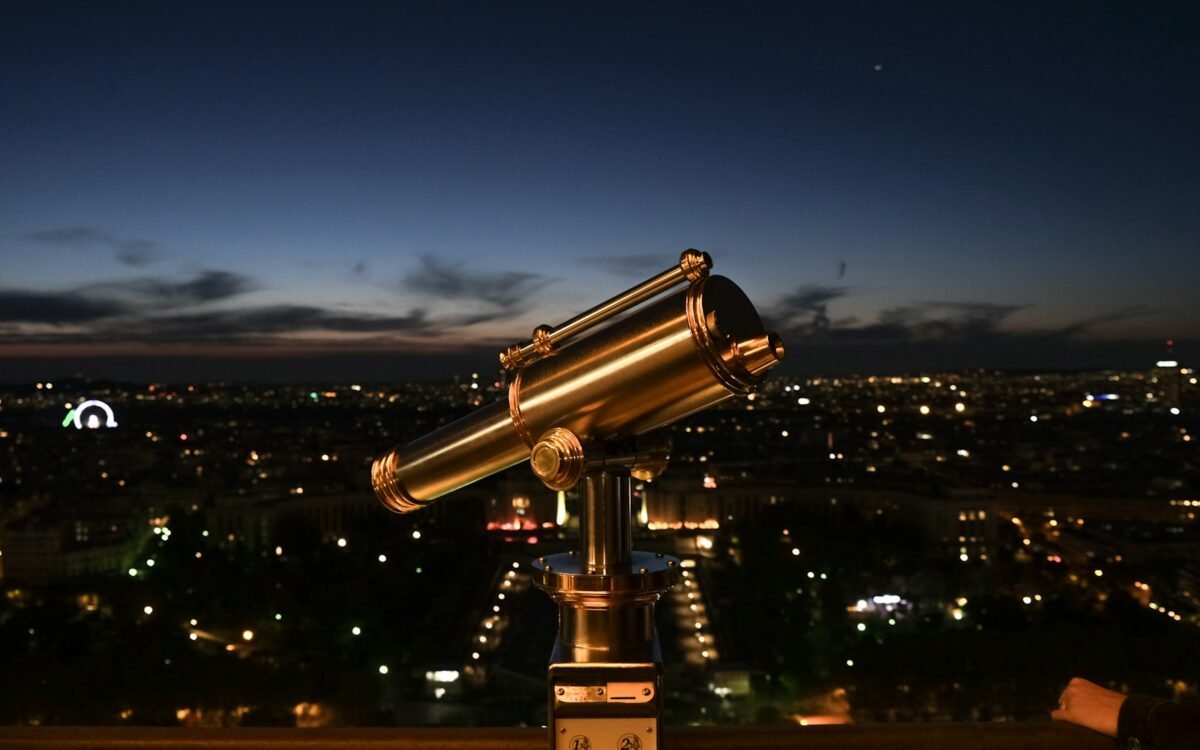
On a clear night, a telescope may show a star as a point of light. A space telescope can turn that point into a spectrum, a time series or a faint smudge from an era before Earth existed. The next generation of observatories is being built around that change in perspective. Rather than simply making familiar pictures sharper, these missions aim to collect light that is old, faint or hidden behind brighter sources and then separate its clues with extraordinary care.
That ambition builds on established astronomy. Light carries information about an object’s temperature, motion, chemistry and age, but the information is weakened by distance and by the intervening universe. Putting an observatory above Earth’s atmosphere removes atmospheric turbulence and blocks some forms of absorption. Larger mirrors collect more photons, while instruments tuned to infrared, ultraviolet, visible or other wavelengths reveal different parts of the same physical story.
Reconstructing the first cosmic structures
One major goal is to find and characterise some of the earliest galaxies. The universe has expanded since their light was emitted, stretching that light toward longer, redder wavelengths. Very distant galaxies can therefore be faint and shifted into infrared bands, where a suitably cold, sensitive telescope has a better chance of detecting them. Finding a candidate is only the beginning. Astronomers need spectra or repeated observations to estimate its distance, chemical composition, star-formation activity and relationship to its surroundings.
The questions are straightforward to state but difficult to answer. How quickly did the first stars enrich their surroundings with heavier elements? How did small early galaxies grow into the large structures seen today? When did black holes begin feeding vigorously, and how did their radiation affect nearby gas? The observations may refine existing models rather than overturn them. A surprising result would still need checks for faint foreground objects, unusual dust or a calibration problem.
These telescopes can also observe galaxies at different stages of development. A single image is not a film of one galaxy growing, because looking farther away means looking farther back in time. But a large, carefully selected sample can let researchers compare stages and test whether proposed growth histories make sense.
Reading the air around distant worlds
Exoplanet atmospheres offer another high-profile target. When a planet passes in front of its star, a small portion of starlight may filter through the atmosphere. Molecules absorb particular wavelengths, leaving patterns that can be measured if the signal is strong enough and the star is quiet enough. A telescope may also record how the system’s total light changes as the planet moves behind its star, which can reveal information about the planet’s emitted or reflected energy.
Established atmospheric physics makes these measurements possible, but interpretation is not simple. Water vapour, carbon-bearing molecules and clouds can overlap in their effects. A hot planet may have chemistry unlike anything in the Solar System, while a hazy atmosphere can hide the molecules underneath. A detected molecule would not automatically prove a planet is habitable, and a potentially interesting combination of gases would require knowledge of the star, the planet’s geology and non-biological chemical pathways.
A powerful telescope does not remove uncertainty; it moves uncertainty into better questions about light, chemistry and context.
Future observatories may be designed to suppress the glare of a host star so that a much fainter planet can be studied directly. Such instruments could eventually search for atmospheric patterns on small, rocky worlds. That is a possibility, not a guaranteed result. The target must be close enough, the star must be suitable, the planet must be observable for long enough and the instrument must distinguish the planet from scattered light and instrumental effects.
Seeing the universe through hidden wavelengths
Space telescopes are also useful when ordinary visible light is blocked. Infrared observations can look through some dust around forming stars and can trace cool material in planetary systems. X-ray observatories can examine hot gas near compact objects, while ultraviolet instruments can study energetic stars and the interaction between radiation and interstellar gas. Different wavelengths are not competing versions of one picture. They are measurements of different physical processes.
Some next-generation missions will work in concert with ground observatories. A space telescope might identify a transient flare, exploding star or gravitational-wave counterpart, then other instruments can measure its spectrum or follow how it changes. Coordinated observing is powerful because events evolve. It also imposes practical limits: telescope time is scarce, instruments need calibration, and an alert may arrive when a target is behind the Sun or otherwise unobservable.
What discovery will require
The phrase next generation includes more than a launch date. It includes detectors with lower noise, mirrors that can be aligned in space, cooling systems, precise pointing and software that turns raw signals into defensible measurements. Every improvement creates a new failure mode to monitor. A faint feature can be a molecule, a cosmic structure or a detector artifact until independent tests narrow the alternatives.
Researchers will therefore compare observations across instruments, wavelengths and teams. They will model selection effects, publish uncertainties and revisit conclusions as better data arrive. The headline discovery may be a new planet or an unexpectedly early galaxy, but the durable result will be a more constrained account of how matter, stars and worlds change.
The next observatories may answer questions that are now speculative. Their more certain promise is methodological: they will make the distant universe measurable in more than one way.
Key takeaways
- New space telescopes aim to study early galaxies, distant atmospheres and hidden energetic processes by collecting faint light across multiple wavelengths.
- A detected molecule or distant object is evidence to interpret, not an automatic answer about habitability, origins or cosmic history.
- Future breakthroughs are possible, but reliable discovery will depend on calibration, comparison across instruments and careful uncertainty estimates.